
One Generation, Five Languages: How Kling AI 3.0 Changes Narrated Property Walkthroughs
When a developer sends us a set of architectural visualizations, the brief is rarely just “make it move.” It’s “make it move, make it look better than the render, and give us a version for every market we’re selling into.” Voice-over used to be the part of that brief that slowed everything down. Book a narrator, record a script, then repeat the booking and the recording for every buyer language. Kling AI 3.0, launched by Kuaishou Technology on February 5, 2026, removes that bottleneck for us. Its native multilingual audio and multi-shot storyboarding let us generate a fully narrated, multi-camera walkthrough as a single AI pass, and then produce it again in another language without touching a microphone or a camera.[1]
A Storyboard, Not a Single Shot
Kling Video 3.0 Omni’s storyboard feature is the part that actually makes a coherent property walkthrough possible from AI generation in the first place. Instead of generating isolated clips and cutting them together afterward, we specify duration, shot size, camera movement, and narrative content for each shot in a sequence. An establishing exterior, an interior sweep through the living space, a close-up on a kitchen finish, or a shared amenity. The model produces them as one continuous, directed generation. Kuaishou’s own materials describe “cross-cutting dialogue and voice-over” as a supported narrative pattern within that storyboard, and that’s exactly the structure a property walkthrough needs. Narration that follows the camera from room to room, not a single static voice dropped over unrelated footage.[1] Each generation can run up to 15 seconds, long enough to carry a real transition between shots rather than a static hold.[1]
Narration Bound to the Walkthrough, Not Bolted On
The archviz work this replaces used to be two separate deliverables. A silent render reel, and a voice-over track commissioned and recorded independently, then synced in post. Kling’s Native Audio generates synchronized speech directly inside the same generation, in English, Chinese, Japanese, Korean, or Spanish, including regional English accents and Chinese dialects, and it supports multi-character dialogue where each speaker uses a different language with full control over content, delivery, and speaking order.[1] For us, that means the walkthrough and its narration are the same output, not two things we assemble afterward. When a developer needs the same property pitched to a different buyer market, we don’t re-shoot or re-record. We re-run the script in the new language against the same storyboard.
Kling’s July 3, 2026 production guide is what makes that narration reliable enough to put in front of a client. It recommends binding a voice to a character “element” using a 3-8 second reference video or reference images, which keeps a consistent narrator identity across every shot in the sequence. The same voice introduces the exterior and closes out the kitchen. The guide also confirms something any AI voice-over workflow eventually has to learn. Clean, simple, short dialogue lines and clearly visible, readable faces produce the most reliable lip-sync.[2] We build our scripts around that constraint rather than fighting it. That’s what keeps the narration usable on the first pass instead of the third.
4K Stills and a Faster Tier for Volume Work
Image 3.0 and Image 3.0 Omni generate native 2K and 4K output aimed explicitly at professional use, with “virtual scene visualization” named as a target case. Useful when a still frame from the walkthrough needs to hold up as a standalone marketing image, not just a video frame.[1] And for developers running larger portfolios where every unit or phase needs its own narrated clip, Kling 3.0 Turbo, launched June 17, 2026, is the volume option. A faster, lower-cost variant with audio bundled into the per-second price (roughly $0.11-$0.14 depending on resolution) and a noticeably tighter lip-sync than the base model.[3] That’s the tier we reach for when a developer needs the same narrated-walkthrough treatment across a dozen units rather than one flagship listing.
What This Means for a Developer’s Marketing Package
Put together, this is the practical shift. One storyboarded generation gives us the shots, the pacing, and the narration in a single pass, and swapping the buyer’s language is a script change, not a reshoot. For a developer marketing a property to domestic and international buyers at the same time, that turns “a localized version” from an added production cost into a variant we can turn around quickly.
If you’re a developer sitting on architectural visualizations that need to become narrated rolls, walkthrough videos, or a multilingual marketing package, get in touch with Moving Pictures. This is the kind of production we’re already running.
From our portfolio
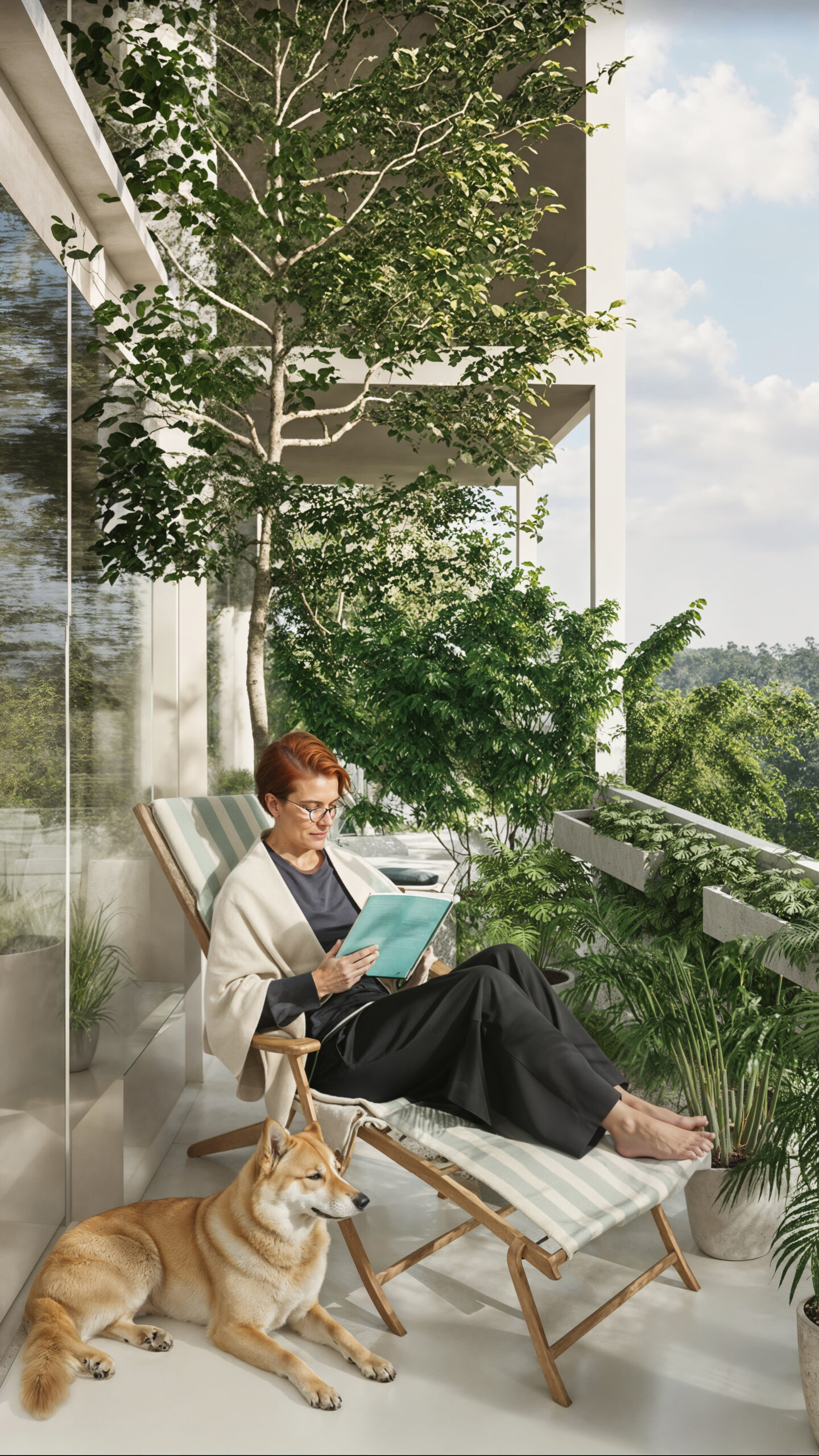
If you are planning promotional materials like this for your own development, get in touch with Moving Pictures.